Book 1: The Secret of the Lighthouse Key
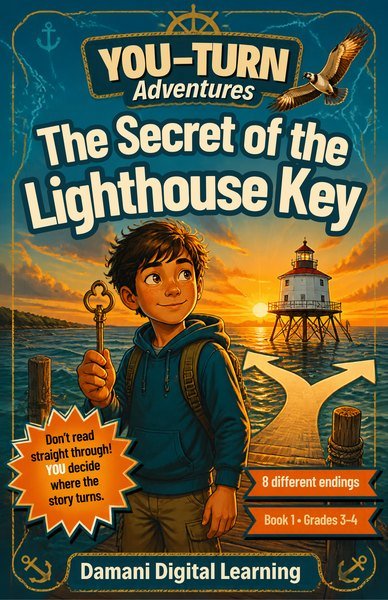
A brass key pulled from a crab pot. A lighthouse nobody has lived in for fifty years. A brave girl from 1933 with a secret. The reader decides how the mystery unfolds on Maryland's Chesapeake Bay.
YOU-TURN Adventures · Grades 3–8
YOU-TURN Adventures are interactive books. Your child is the main character, and every few pages they decide what happens next. The story doesn't end until they choose how. Kids who usually put books down keep turning pages, because they want to see what their choice did.
Watch a YOU-TURN book in action
This is what reading a YOU-TURN book looks like. The reader finishes a short page, picks a choice at the bottom, and flips straight to a different part of the book. Pick differently next time, and you land somewhere else entirely.
This is not a normal book
A regular book has one story and one ending. A YOU-TURN book has many. Your child reads a short section, makes a choice, and jumps to the page that choice names. Every choice sends the story in a new direction, so two kids can read the same book and finish with completely different stories.
What a page looks like
The reader finds an old brass key in a crab pot on the Chesapeake Bay. One page later, they're already deciding what to do with it. Each choice sends them somewhere different: the town museum, the beach, or Grandma's dusty attic.
Shortened excerpt from The Secret of the Lighthouse Key, YOU-TURN Adventures Book 1.
"That key has been on the bottom of the bay a long time," Grandpa says. He points across the water to a small white house with a red roof, standing on iron legs above the waves. "That's Turtle Point Lighthouse. Nobody has lived out there for fifty years."
Your heart starts to beat faster. What does the key open? You slip it into your pocket. It is time to decide what to do first.
Made for reluctant readers
Many kids don't dislike stories. They dislike long stretches of reading with nothing to do but wait for something to happen. YOU-TURN books give them a job to do.
The reader decides where the story goes. Having a say in the ending gives a reluctant reader a reason to pay attention to every page.
Sections are about two pages long. Kids reach a decision quickly instead of facing a long chapter.
To find the other endings, readers go back and read again. That's extra reading practice that doesn't feel like homework.
"What ending did you get?" Friends and classmates compare paths and argue about the best choice, which builds comprehension and conversation.
Smart, honest and careful choices tend to lead to the best endings. Kids see cause and effect in action and talk about why.
The writing is mostly dialogue and short sentences, so it reads one to two grade levels easier than the age it's written for. Older kids get a story that fits their age without struggling through every page.
The books
A brass key pulled from a crab pot. A lighthouse nobody has lived in for fifty years. A brave girl from 1933 with a secret. The reader decides how the mystery unfolds on Maryland's Chesapeake Bay.
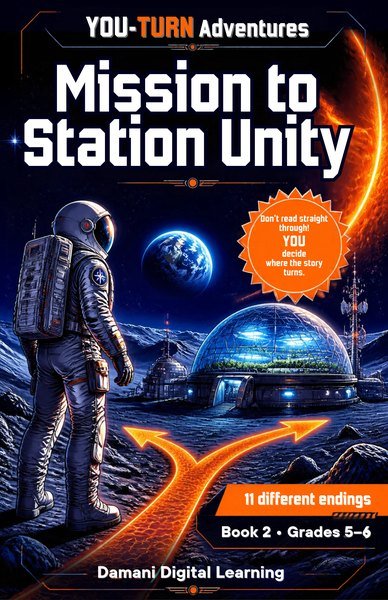
It's 2061. The reader is a 13-year-old Junior Mission Specialist on a research base at the Moon's south pole. A radiation storm is five hours away, the air system is failing, and every decision is theirs.
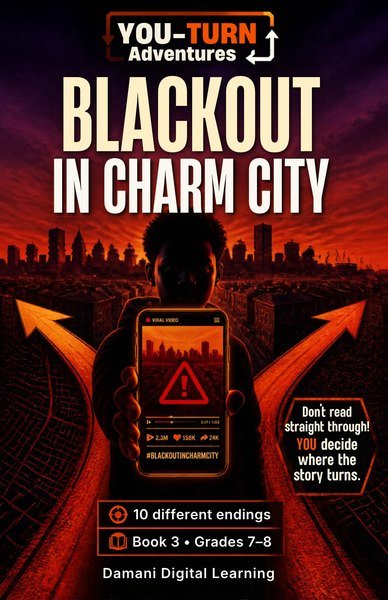
A record heat wave knocks out Baltimore's power. A viral video claims hackers poisoned the water, and a neighbor is alone in the heat. The reader has to sort facts from rumors and decide whom to trust.
Every book includes a Path Tracker, an Ending Collection checklist, a Word Bank and discussion questions. Coming soon to Amazon
For parents
You don't need to do anything special. These small habits help a reluctant reader stick with it.
For teachers
The classroom web edition runs on any computer or tablet. Each finished path gets a short code, so partners can compare their codes and see the exact choice where their stories split. The Teacher Enrichment Guide includes a five-day plan, five group activities, discussion questions and reproducible pages.
Aligned to Maryland College and Career-Ready Standards for reading, writing and speaking, plus Maryland science and computer science standards.
Questions
No. One path through the book takes about 10 to 20 minutes. Most kids go back to find more endings on their own, and that's where the extra reading happens.
Not at all. It's called taking a YOU-TURN, and it's the point. Every ending a reader finds is more reading, and comparing endings builds understanding of cause and effect.
Each book is written for the interest of its grade band: grades 3–4, 5–6 and 7–8. Because the writing uses short sentences and lots of dialogue, it reads one to two grade levels easier than that, which is why it works well for kids who struggle or don't enjoy reading.
Some endings don't go well, and that's part of learning that choices matter. Every "try again" ending is age-appropriate and invites the reader to go back and choose differently. Book 3, for grades 7–8, includes a real emergency during a heat wave, handled the way a middle-school novel would.
Yes. Ask for a quote on class sets, the classroom web edition and the Teacher Enrichment Guide.
The paperbacks are coming soon to Amazon. Join the early list to hear the day they're available.
YOU-TURN Adventures